Where Geosciences Power the Future of Science and Technology
THE EARTH-CENTRED CORE OF STEM
SGEM is where STEM begins.
In today’s interconnected world, GeoSciences and STEM (Science, Technology, Engineering, and Mathematics) are at the heart of global progress. From understanding natural systems and planetary boundaries to driving innovation in clean energy, infrastructure, and digital technologies, these fields form the core of modern scientific development. As challenges such as climate change, urbanization, and sustainable resource use intensify, GeoSciences and STEM offer the tools and knowledge needed to shape a more resilient and intelligent future.
Amid these priorities, SGEM emerged as a platform that doesn’t just support STEM—it embodies it through the lens of Earth and society.
01
For over a quarter of a century
For over a quarter of a century, the SGEM GeoConference has been more than a prestigious scientific gathering—it has stood as the scientific core of STEM in Geosciences, uniting the four foundational pillars: Science, Technology, Engineering, and Mathematics.
2001
Surveying, Geology, Environment, and Management
Founded in 2001, SGEM emerged at the very moment the world began speaking of STEM. While the term was just being coined by global institutions, SGEM was already putting it into action—through Surveying, Geology, Environment, and Management. These were not just themes—they were the heartbeat of a movement, rooted in Earth, built on data, and guided by practical application.
TODAY
Sustainability, Geosciences, Education, and Multidisciplinarity
Over the years, as global priorities shifted and the scope of scientific challenges widened, SGEM evolved as well. From its origins in Surveying, Geology, Environment and Management, it expanded its horizons to meet the needs of a changing world. Today, SGEM proudly embraces a deeper mission: Sustainability, Geosciences, Education, and Multidisciplinarity.
EARTH · KNOWLEDGE · APPLICATION
While the global STEM movement drives advancements across disciplines, SGEM specializes in its deepest root—Earth. Our work begins in the soil, the oceans, the atmosphere—but rises into AI, smart cities, renewable energy, planetary exploration, and climate resilience. This is the unique role SGEM plays in the academic ecosystem: SGEM is where STEM begins.
SGEM & STEM
Where STEM is the skeleton of innovation, SGEM is the living body
Where STEM is the skeleton of innovation, SGEM is the living body—pulsing with disciplines, ideas, and voices from across the spectrum of human knowledge. It’s where clean energy meets classical heritage, and artificial intelligence shakes hands with ancient philosophy.
In every SGEM session, paper, or dialogue, you find:
01
Science
Science in the exploration of natural systems and planetary processes
02
Technology
Technology in the tools we use to observe, map, and model the world
03
Engineering
Engineering in the solutions we build—from resilient infrastructure to sustainable mining
04
Mathematics
Mathematics in geoinformatics, predictive simulations, and data-driven forecasting
By bridging fundamental science and applied innovation, SGEM doesn’t just align with STEM—it embodies STEM in the context of Earth and sustainability. Every discipline within SGEM lives at the intersection of knowledge and responsibility, discovery and application.
PRINCIPLES
SGEM means:
01Science rooted in truth, not trend.
02Global dialogue, not isolated discovery.
03Peer-reviewed precision, wrapped in beauty, music, art, and cultural memory.
04A place where the Earth is not just studied—but respected.
05Where a journal is not just a publication—but a witness of thought.
ACADEMIC RECOGNITION
As the core scientific division of the SWS Scholarly Society, SGEM GeoConference is globally recognized, with proceedings indexed in Scopus, Clarivate Analytics, EBSCO, and ProQuest. It is a trusted platform for high-impact research, policy development, and education.
While STEM shapes the future of education and innovation, SGEM grounds it—in geology, sustainability, exploration, and environmental protection. In this way, SGEM is not only a part of STEM—it is the soul and pulse of STEM in Geosciences.
WITHIN THIS DIVISION ARE TWO LANDMARK ACADEMIC PLATFORMS
This is where satellites meet soil, where algorithms predict earthquakes, where hydrogen and hydrogen bonds find meaning under one roof. This is where engineers, scientists, and thinkers gather to unlock the Earth’s potential—for humanity, the planet, and the generations to come.
Let us continue to shape that tomorrow—grounded in Earth, driven by STEM, and guided by the SGEM spirit.
RESEARCH & DISCOVERY
SWS Research Online Library - Earth & Planetary Sciences (EPS)
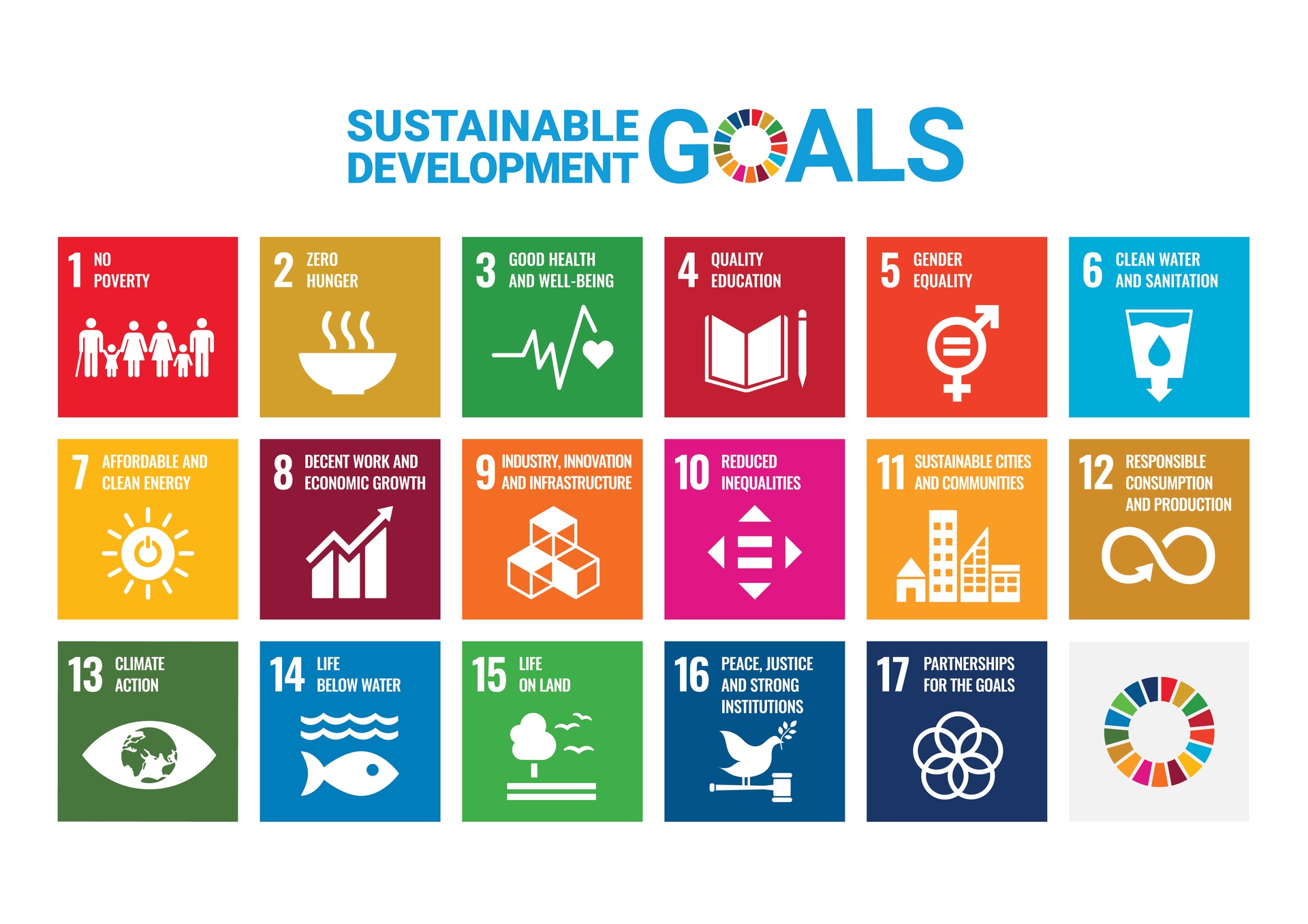
Now, let's explore the powerful connections between SGEM, STEM, Earth & Planetary Sciences (EPS), and the United Nations Sustainable Development Goals (SDGs)
SGEM GeoConference deeply focuses on Earth & Planetary Sciences (EPS), an integral part of the global STEM (Science, Technology, Engineering, Mathematics) initiative. Through rigorous scientific research, technological innovation, and interdisciplinary collaboration, our EPS sections are strategically aligned with the United Nations Sustainable Development Goals (SDGs), actively contributing to addressing today's most critical environmental and societal challenges.
Our EPS sections are specifically designed to contribute significantly to these SDGs, ensuring that our collective scientific advancements directly support global efforts toward sustainable development. Below, we illustrate how each specialized area within our EPS division aligns with and supports these vital global goals:
01
SDG 6: Clean Water and Sanitation
Focus: Ensuring availability, sustainable management of water, and resilience to climate impacts.
EPS sections covering: ✔️Hydrology, Water Resources, and Climate Resilience
02
SDG 7: Affordable and Clean Energy
Focus: Developing sustainable energy systems, clean and innovative technologies.
EPS sections covering: ✔️Clean Energy Systems and Energy Storage Technologies, ✔️Hydrogen Advanced Nuclear Technologies and Energy Innovation
03
SDG 9: Industry, Innovation, and Infrastructure
Focus: Promoting sustainable industrialization and innovation through responsible exploration, resource management, and infrastructure.
EPS sections covering: ✔️Sustainable Exploration and Mining Technologies ✔️Geological Sciences and Resource Management ✔️Geophysical Methods for Environmental and Resource Monitoring
EPS sections covering: ✔️Green Design, Sustainable Cities, and Architecture ✔️Green Building Materials and Eco-Technologies
05
SDG 12: Responsible Consumption and Production
Focus: Promoting sustainable consumption and production patterns through recycling, waste management, and efficient resource utilization.
EPS sections covering: ✔️Recycling, Waste Management, and Circular Economy ✔️Sustainable Mineral Processing and Resource Efficiency
06
SDG 13: Climate Action
Focus: Taking urgent action to combat climate change and its impacts through targeted research and innovative solutions.
EPS sections covering: ✔️Air Quality, Pollution Control, and Climate Change Mitigation ✔️Hydrogeology, Engineering Geology, and Climate-Resilient Geotechnics
07
SDG 14: Life Below Water
Focus: Conserving marine ecosystems, sustainable use of ocean resources, and enhancing marine biodiversity.
EPS sections covering: ✔️Marine, Ocean, and Coastal Ecosystems. Blue Carbon
08
SDG 15: Life on Land
Focus: Protecting terrestrial ecosystems, halting biodiversity loss, and fostering sustainable forestry and land restoration.
EPS sections covering: ✔️Forest Ecosystems and Sustainable Forestry ✔️Soil Science, Conservation, and Land Restoration ✔️Ecology, Biodiversity, and Environmental Protection
09
SDG 17: Partnerships for the Goals
Focus: Strengthening global partnerships, enhancing education, and promoting cooperative international efforts in environmental sciences and space exploration.
EPS sections covering: ✔️Environmental Legislation, International Cooperation, and Funding Strategies ✔️Space Technologies and Planetary Exploration, Space Mining ✔️Education, Training, and Capacity Building in GeoSciences